

Septic to Sewer Conversion: One Homeowner’s Experience
8 min read • July 31st, 2026
8 min read • July 31st, 2026

When Daniel bought his Maryland home, he knew it was on septic. What he didn’t know was that a single permit application to add a bathroom to his attic would set off a six-year septic-to-sewer conversion process.
Baltimore County put Daniel’s renovation permit on hold until the process was complete. What followed was neighbor negotiations, a private easement recorded on a deed, and a post-COVID contractor estimate that nearly tripled.
But at the end of it all, Daniel says he’d do it again without hesitation.
His story is an extreme case. The good news is that septic to sewer conversions are typically far simpler and far less expensive. But Daniel’s story illustrates something important: the process involves more than just swapping pipes. It impacts your property, your neighbors, your local government, and your long-term finances in ways worth understanding before you start.
This guide covers everything you need to know about a septic to sewer conversion — from how the process works to what it costs, and how to know if it’s the right move for your home.
Before diving into the conversion process, it helps to understand what you’re converting from and to.
A septic system is a self-contained wastewater system typically used in areas where public sewer isn’t available. In most cases, wastewater from your home flows into a tank, where solids settle and liquids drain through a field into the ground. The system is entirely on your property and entirely your responsibility to maintain.
A public sewer system is a municipal network of pipes that carries wastewater from your home to a centralized treatment facility. Once you’re connected, the municipality manages treatment and infrastructure. Your job is simply to pay the monthly service fee.
Both systems get the job done, but they come with very different maintenance demands, cost structures, and long-term implications for your property and property value. This is why so many homeowners eventually consider making the switch.
For Daniel, the decision was made partly for him — Baltimore County required it before approving his renovation permit. Even without a county mandate, though, there are compelling reasons to make the switch:
Once you’ve decided a conversion makes sense for your situation, the next step is understanding how it works. Here’s a breakdown of the process from start to finish.
Understanding the process before you start can save you significant time, money, and frustration. Here’s what a typical conversion looks like — with notes from Daniel’s experience along the way.
Before any permits are pulled or bids requested, your property needs to be assessed. A licensed engineer will evaluate your lot, determine the best route to the public sewer, and produce a site plan. This typically costs around $2,000.
Daniel was able to develop his own engineering plan — a skill from his professional background that saved him that cost. Most homeowners will need to hire an engineer.
There are two primary ways to connect a home to city sewer:
Your engineer and plumber will advise on which is appropriate for your property’s topography and proximity to the sewer main.
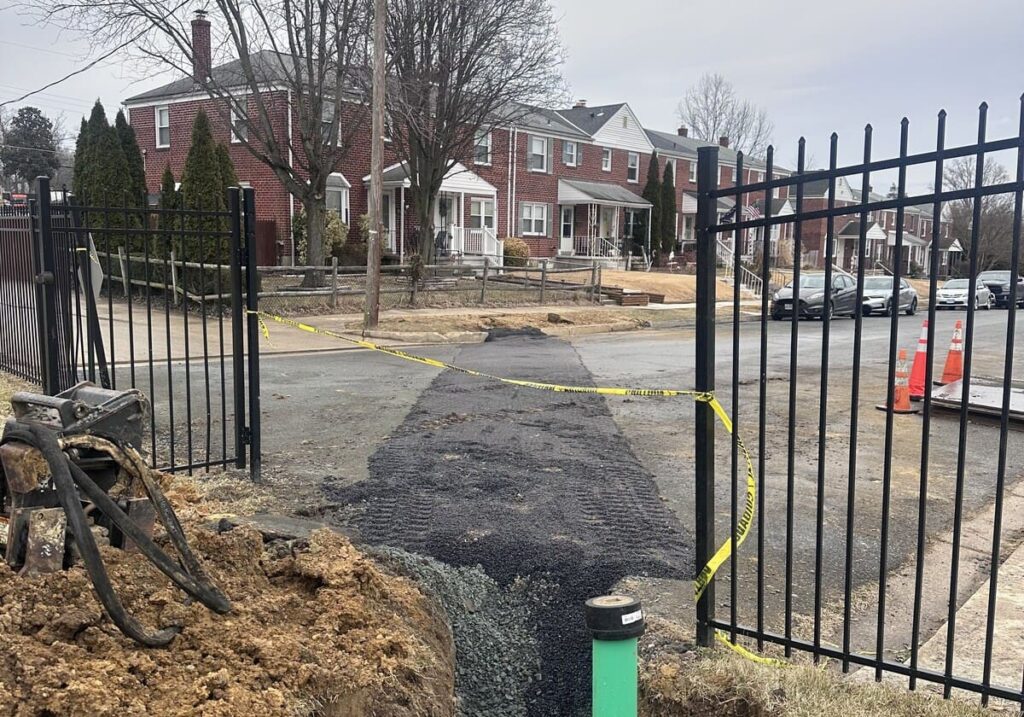
Every municipality has its own permitting requirements. You’ll need to submit your site plan, pay permit fees (typically $200–$4,800), and receive approval before any work begins. A county inspector will need to be present and supervising throughout the construction phase.
If your sewer line needs to cross a neighbor’s property — as Daniel’s did — you’ll also need a private easement: a legal agreement drafted by an attorney, notarized by all parties, and recorded on the neighbor’s deed. This adds time and cost, but, depending on your situation, it might be a legally necessary step. Daniel’s neighbor didn’t charge him for use of her land, but easement agreements can cost $2,000 and up when the neighbor does charge.
In Daniel’s situation, Baltimore County required us, Heil Plumbing, to hold a specific utility license to perform this type of work. This may be an additional step, depending on your plumber and your municipality.
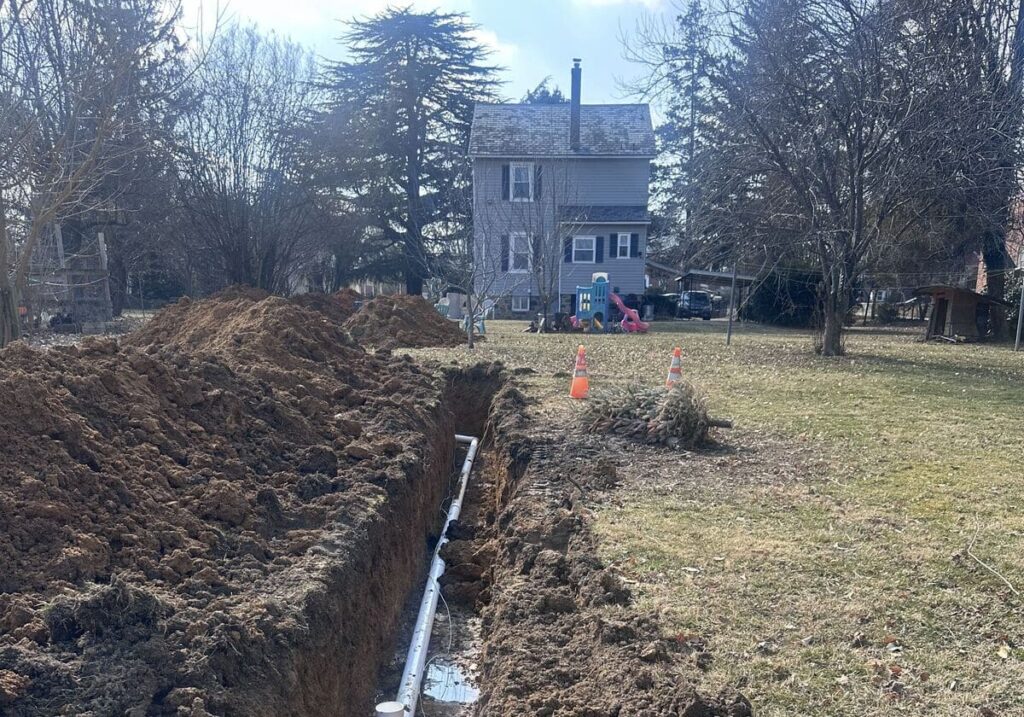
Once permits are approved, the work can begin! Connecting to a public sewer typically involves:
• Digging a trench from your home to the public sewer connection point
• Laying pipe (PVC is the most common and cost-effective material)
• Tapping into the public sewer main
• Traffic control and county inspector oversight throughout
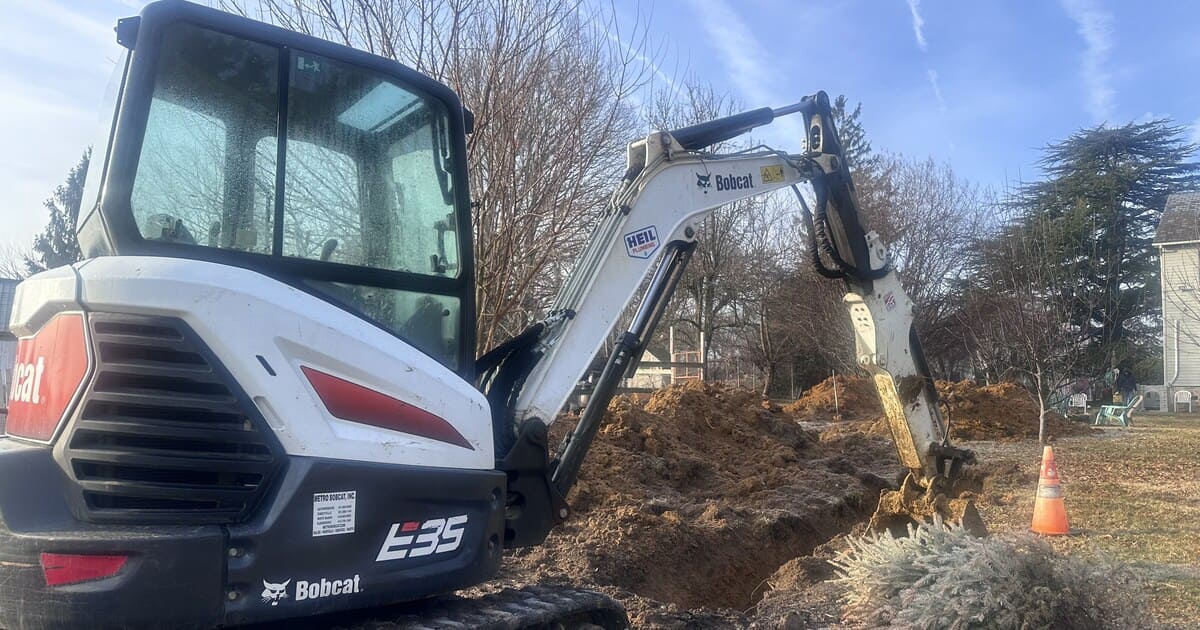
Daniel’s construction phase with Heil took 2–3 weeks. Since crews generally can’t work in rain, weather can be a major factor. And, since the county inspector must be present throughout, scheduling and availability can impact your timeline.
The actual downtime to your plumbing is minimal. Daniel’s crew made all the internal connections first, then tapped from the old line to the new sewer line. His home was without working plumbing for just a couple of hours.
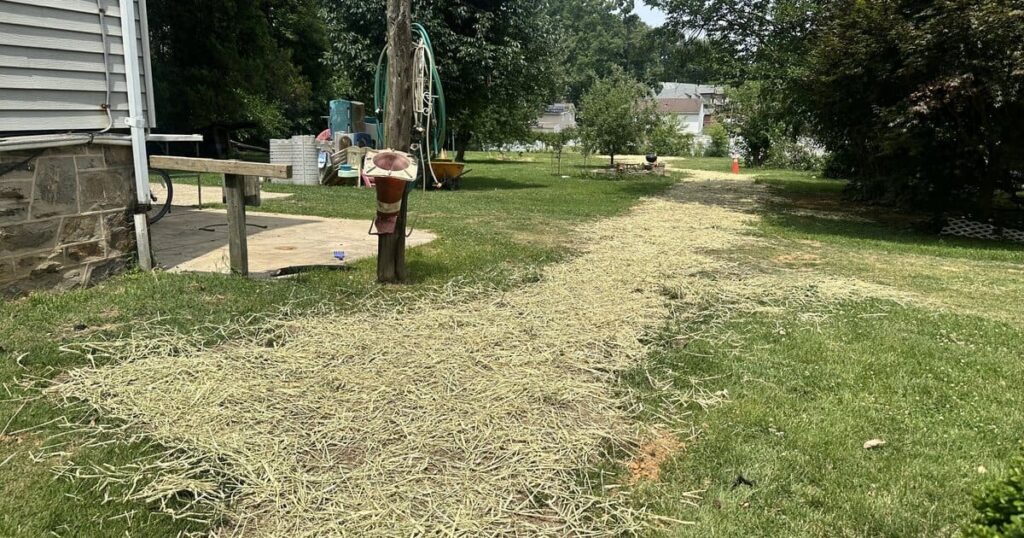
One note on yard disruption: trenching leaves significant damage across your property. For that reason, it’s important to make sure grading, topsoil replacement, and reseeding are explicitly included in your contract.
Once you’re connected and operational, your old septic tank must be properly decommissioned. The standard process is to remove and crush the top of the tank, pump the contents of the tank out, and fill in the tank. This will need to be verified by the Health Department once all is said and done. Decommissioning is typically included in the contractor’s scope but is worth confirming explicitly.
After construction is complete, a final county inspection confirms the work meets code. Once approved, your connection is activated and you begin paying the municipal sewer service fee.
Every step in that process comes with a price tag. Here’s a realistic look at what a septic to sewer conversion costs — from the typical range most homeowners fall into, to what can drive costs higher.
In general, a full septic to sewer conversion — including septic decommissioning, trenching, piping, and permits — typically runs $7,000 to $25,000+ for a standard residential property.
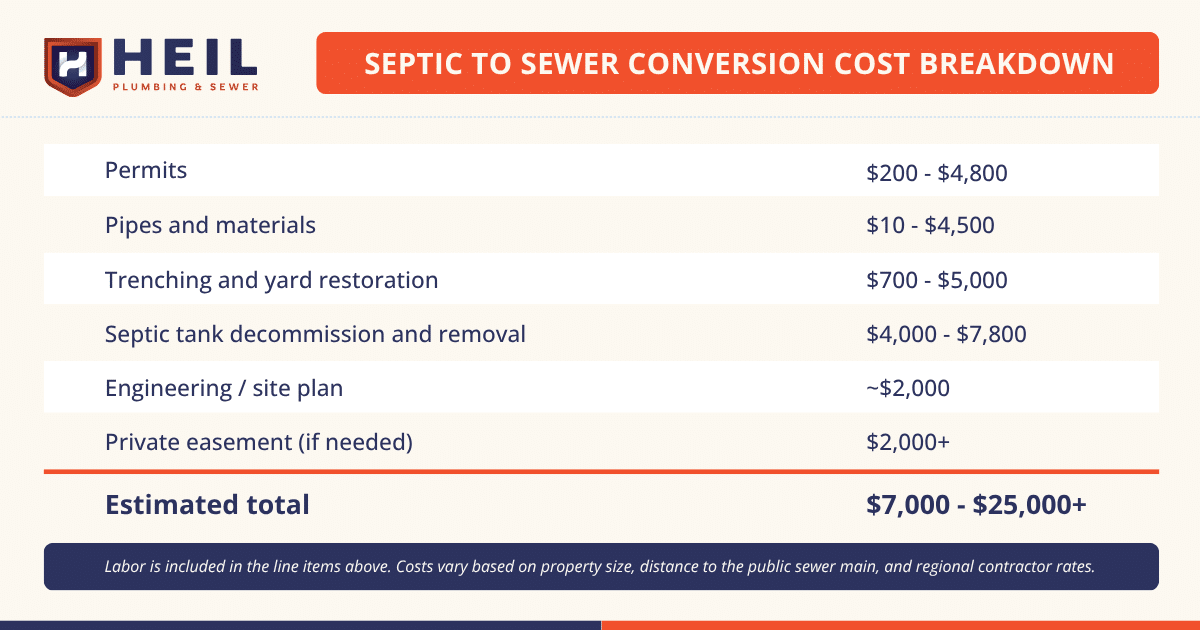
Depending on your property and timing, your costs could run higher. Daniel’s conversion costs exceeded this typical range because of several factors:
• His multi-acre property required extensive trenching
• Post-COVID contractor costs surged
• His conversion involved private easement negotiation and legal fees
• He encountered a complex permitting process in Baltimore County
For homeowners on standard residential lots with straightforward access to the public sewer, the $6,400–$18,000 range is a reasonable planning benchmark.
Daniel received $25,000 back through The Bay Restoration Fund Grant Program — bringing his net cost down significantly. Many Maryland counties and municipalities across the country offer financial assistance to encourage homeowners to connect to city sewer.
The good news is that, for homeowners with less complicated property scenarios than Daniel’s, a grant may cover the majority of the conversion cost. Ask your local plumber or county sewer department about available programs before you get started on a project like this. It could change your entire financial picture.
And if you still have questions, keep reading for answers to the most frequently asked questions homeowners like yourself have asked.
Generally, yes. Homes connected to public sewer are more attractive to buyers and tend to appraise higher than comparable homes on septic. The exact increase depends on your market and property.
For most homeowners with access to city sewer, yes — particularly when you factor in long-term maintenance savings, property value increase, and the removal of septic-related maintenance and risk.
For most homeowners, a full septic to sewer conversion runs between $7,000 and $25,000. That range covers permits, piping, trenching, and septic tank decommissioning for a standard residential property. Complex situations — like a large lot, difficult sewer access, or a private easement through a neighbor’s property — can push costs higher. The good news is that many Maryland counties offer grant programs that can offset a large portion of the cost. Ask your local plumber or municipality about programs that are available to you.
Check with your local municipality to confirm that a public sewer main is within reach of your property before you spend time or money planning.
Yes. You’ll need permits from your local municipality, and a county inspector must supervise the work. If your sewer line crosses a neighbor’s property, you’ll also need a legally recorded private easement.
Not all plumbing contractors are qualified to perform sewer connection work in every jurisdiction. Confirm license and qualifications upfront.
Many counties offer financial assistance for conversions. This should be one of your first calls — before you request bids or finalize a budget.
A solid contract should include permits, trenching, pipe materials and installation, the sewer tap connection, and septic tank decommissioning. What often gets left out — or left vague — is landscaping restoration. Once the trenching is done, your yard can look like a construction zone. Grading, topsoil replacement, and reseeding should be explicitly written into the contract with a clear timeline.
Construction typically takes 2–3 weeks for a standard residential conversion. However, the full process — including permitting, county approval, and any easement agreements — can take significantly longer. Plan for 3–6 months from start to finish for a straightforward project; complex properties may take considerably more.
For most homeowners with access to city sewer, the long-term case for conversion is strong: lower maintenance burden, increased property value, renovation flexibility, and peace of mind that comes from handing wastewater management to the municipality.
The upfront cost is real — but with grant programs, competitive contractor bids, and the right timing, it may be more manageable than it first appears. And as Daniel’s story shows, even the most complicated conversions are typically still worth it in hindsight.
The key is going in informed: understand the process, confirm what programs are available in your area, get multiple bids, and work with a licensed plumber who knows your county’s requirements inside and out.
That’s exactly the kind of plumber Daniel found in Heil Plumbing & HVAC — and why he chose us even when we weren’t the cheapest bid. We’ve been serving Baltimore County homeowners for three generations, and our Baltimore area sewer line repair and replacement team has navigated complex situations. If you’re in Baltimore County or the surrounding area, we’re ready to help you figure out your next step.