

Window AC vs Central Air: Which One Is Right for Your Home?
4 min read • July 30th, 2026
4 min read • July 30th, 2026

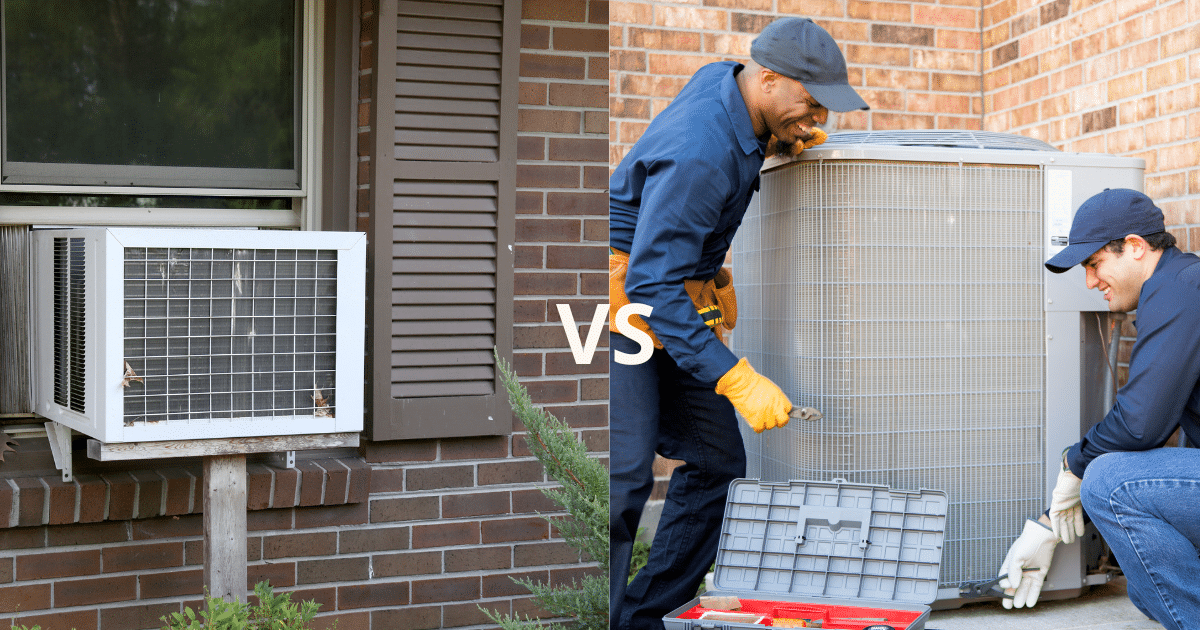
The verdict on the window AC vs. central air debate depends on three things: your home, your budget, and how long you plan to stay.
Many homeowners make this decision based on upfront cost alone and then end up regretting it. Before you buy anything, there are a few things worth understanding about how these systems actually compare.
Window AC units are self-contained. They mount in a window frame, pull warm air over refrigerant coils, cool it, and push it back into the room. Everything happens in one compact box. No installation professional required — most homeowners can set one up in under an hour.
Central air conditioning works differently. An outdoor condenser unit connects to an indoor air handler, and cooled air is distributed throughout your home via a duct and vent system. One thermostat controls the whole house. The result is consistent, even temperatures from room to room — but it requires ductwork and professional installation.
The differences in how these systems work explain a lot about why they cost what they do.

Window AC units have an obvious cost advantage upfront. A single unit runs $150 to $800, and installation is a DIY job. Central air typically costs $3,000 to $7,500 or more to install, assuming your home has existing ductwork. If not, the cost can be significantly more.
But here’s where the math gets interesting. If you need to cool four or five rooms, you’re buying four or five window units. At that point, both the upfront and the operational costs add up fast. Running multiple window units simultaneously can end up costing more per month than a properly sized central air system cooling the same square footage.
Simple rule of thumb: window AC is cheaper upfront. Central air is cheaper to run — and the bigger your home, the more that gap grows.
Sometimes, a window AC unit is clearly the right choice. Consider one if:
Along with those benefits, though, come real trade-offs. Window units are louder than central systems, they block natural light, and they can be a security concern on first-floor windows if not properly secured. They’re also a single-room solution, which is fine until you need more than one or two of them.
Central air is the right call when you’re thinking long-term. If you own your home, plan to stay, and want consistent comfort without managing multiple window units, central air delivers in ways a window unit simply can’t. Central air makes the most sense when:
The trade-off is higher upfront cost and the need for professional installation. But for homeowners who are in it for the long run, central air almost always pays for itself over time.
Before you decide, there’s one more option worth considering — particularly if you don’t have existing ductwork.

If neither option feels quite right, there’s a third path worth knowing about. Ductless mini-splits connect an outdoor compressor to one or more indoor air handlers through small refrigerant lines — no ductwork required. They offer room-by-room temperature control, run quietly, and are significantly more energy-efficient than window units.
While they cost more upfront than a window AC unit, they are generally less expensive than a full central air installation in many cases.
The FAQ below addresses the questions that tend to come up most once homeowners start weighing their options.
For a single room, yes. A window unit uses significantly less electricity than a central air system. But that advantage disappears when you’re running multiple units. For whole-home cooling, central air is typically more cost-efficient per square foot. To learn about how to run central air as cost-effectively as possible, read When to Turn On AC and Spring HVAC Maintenance Checklist.
The biggest factor is whether you have existing ductwork. If you do, adding central air is relatively straightforward. If you don’t, the cost of installing ductwork can add significantly to the project. A licensed HVAC technician can assess your home and give you an honest answer.
Absolutely — and it’s a smart approach for spaces your ductwork doesn’t reach, like a finished attic, sunroom, or home addition. A window unit or ductless mini-split can handle those zones without overworking your central system.
A well-maintained central air system typically lasts 15 to 20 years. Window units have a much shorter lifespan — usually 8 to 10 years — and they’re more vulnerable to wear since the entire unit is exposed to the elements.
Yes — central air is consistently cited as a home feature that adds resale value. It’s not a guaranteed return on investment, but buyers notice it, and homes without it can be harder to sell in warmer climates.
Whether you’re weighing a window AC unit vs. central air for the first time or you’ve been running window units for years and are finally ready to make the switch, Heil Plumbing & HVAC can help you figure out what actually makes sense for your home.
We’ve been serving Howard County homeowners for nearly 50 years — and we’ll give you a straight answer before we ever give you a quote. If you’re ready to explore your options, our Howard County air conditioning team is here to help.